Axle Spacing Effect on Load Distribution and Ride Stability in Semi Trailers

Technical analysis of how axle spacing influences load distribution, suspension dynamics, and overall stability in multi-axle trailer configurations.

Suspension Geometry Vehicle Dynamics
📅 Published on 2026-07-18 | ✍️ Semi Trailer News Engineering Desk

Axle spacing and stability analysis in multi-axle semi trailers

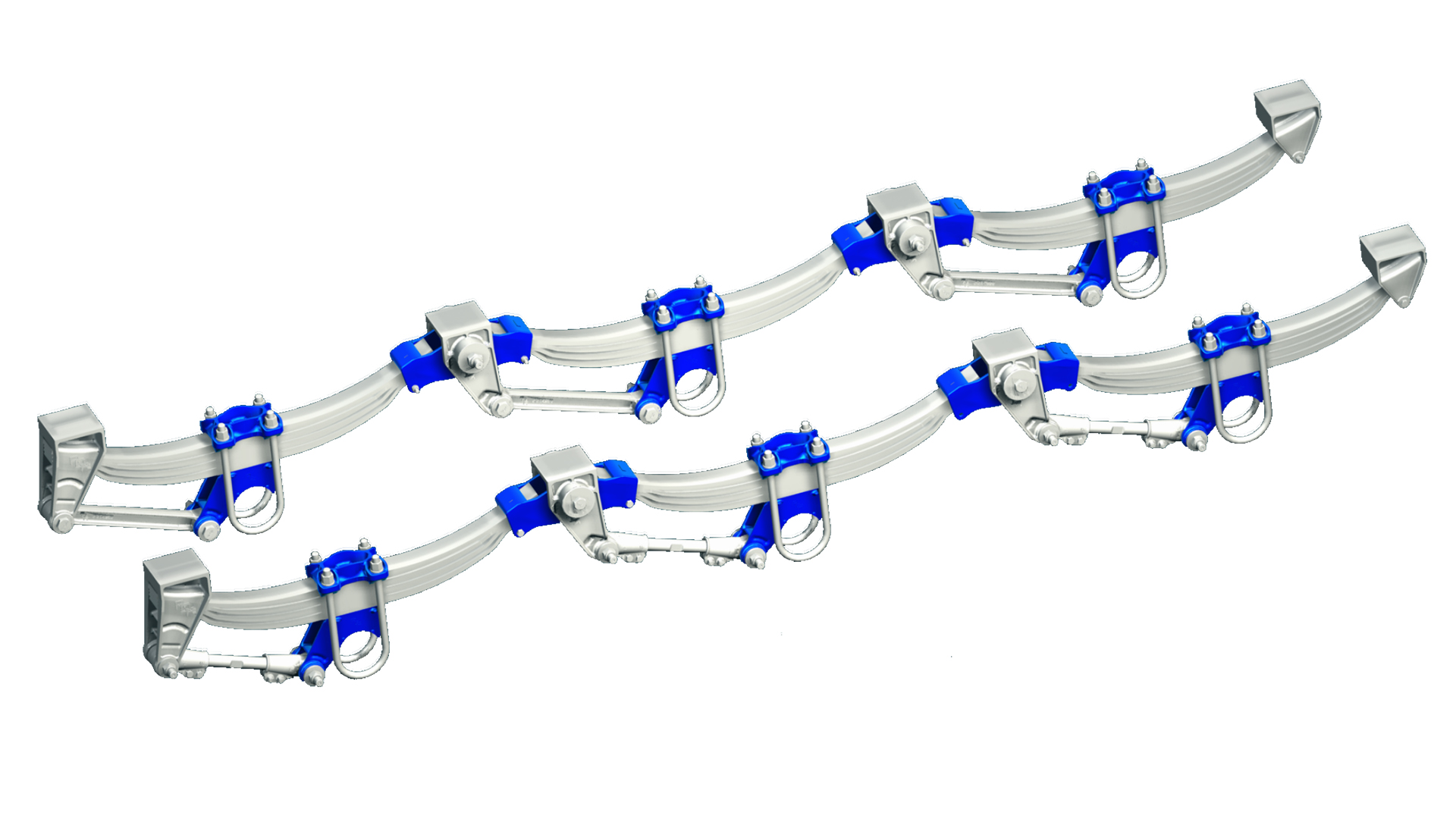
Image: Dynamic load distribution model of 4-axle lowbed trailer showing equalization via mechanical suspension

Why Axle Spacing Matters

Axle spacing is not merely a dimensional parameter — it is a primary structural and dynamic design variable in trailer engineering. It determines how vertical loads, braking forces, and longitudinal stress are distributed among suspension systems and chassis members.

Proper spacing directly influences braking stability, tire wear patterns, ride comfort, lateral stability, articulation behavior, and turning radius. Incorrect spacing can create uneven axle loading, premature suspension wear, and amplified dynamic stress under real road conditions.

Engineering Perspective:
Axle spacing controls the “load phase timing” — the way each axle sequentially absorbs vertical road input. This phase distribution reduces shock concentration and improves chassis longevity.

⚙ Load Distribution Basics

In a conventional 3-axle equalized suspension system, the central axle often carries slightly higher static load due to equalizer beam geometry and pivot leverage. However, dynamic load transfer during braking or uneven terrain can temporarily shift weight forward or rearward.

Increasing spacing between axles allows more independent articulation. This improves ground contact consistency and reduces instantaneous stress peaks in crossmembers and spring hangers.

Mini Converter: Axle Spacing → Estimated Turning Radius

Turning radius grows proportionally with effective wheelbase length. The simplified estimator below provides an approximate indication of drag radius change relative to axle spacing.

Estimated Turning Radius: 0 m

Note: This simplified model assumes proportional wheelbase influence and does not replace full kinematic analysis.

Typical Configurations

Trailer TypeAxle Spacing (mm)Ride Characteristics
Standard 3-Axle Semi1310–1360Balanced comfort & controlled load sharing
4-Axle Lowbed1360–1420Improved longitudinal stability, moderate drag radius
Heavy-Duty 5-Axle1400–1500Enhanced articulation, better axle compliance
Modular / Extendable1500+Superior articulation, larger turning sweep
Sponsored

Premium Semi Trailers from Turkey – Alura Trailer

If you are looking for high-quality new semi trailers manufactured in Turkey, you can visit Alura Trailer. The company produces lowbeds, flatbeds, extendable trailers, tankers, tippers, and mobile workshops built with European components and export-grade engineering.

Alura Lowbed Trailer Alura Flatbed Semi Trailer Alura Heavy Duty Lowbed

Dynamic Stability

Axle spacing significantly influences how a trailer reacts to dynamic inputs such as braking, potholes, and cornering.

This phase delay reduces simultaneous vertical impact concentration and distributes stress more evenly across the chassis. In heavy-duty transport applications, proper spacing reduces fatigue accumulation in spring hangers and crossmembers.

Phase Delay Effect – Sequential Axle Load Absorption

When a trailer encounters a road irregularity, each axle absorbs vertical input at slightly different time intervals. This “phase delay” reduces simultaneous shock concentration and distributes stress progressively along the chassis.

Axle 1 Impact Phase 1 Axle 2 Impact Phase 2 Axle 3 Impact Phase 3 Vehicle Forward Motion

With optimized axle spacing, impact waves travel progressively from front to rear. If spacing is too narrow, multiple axles absorb the same shock simultaneously, increasing peak stress. If spacing is excessive, chassis bending moment increases. Proper engineering spacing achieves controlled sequential absorption.

Engineering Note:
The phase delay phenomenon reduces instantaneous peak load by distributing energy over time. This improves hanger durability, tire life, and chassis fatigue resistance.

Suspension Type Interaction

Axle spacing behavior is closely linked to suspension architecture. Equalizer geometry, air leveling systems, and hydraulic load balancing mechanisms each respond differently to spacing adjustments.

Mechanical vs Air Suspension – Axle Spacing Comparison

Axle spacing strategy varies significantly depending on suspension architecture. Mechanical and air suspension systems distribute loads differently, which directly affects optimal spacing configuration.

Parameter Mechanical Suspension Air Suspension
Typical Optimal Spacing 1320–1380 mm 1250–1360 mm
Load Equalization Method Equalizer beam & leaf spring geometry Air pressure balancing via air bags
Dynamic Shock Absorption Sequential mechanical articulation Independent vertical compliance
Spacing Sensitivity High – geometry directly affects load sharing Moderate – air levelling compensates imbalance
Frame Stress Transfer More rigid load path More distributed vertical damping
Maintenance Complexity Low – fewer active components Higher – valves, airbags, leveling systems
Off-Road Suitability Excellent durability Moderate – sensitive to harsh terrain

Mechanical suspension spacing must be carefully optimized because load transfer depends heavily on equalizer beam geometry. Incorrect spacing can cause uneven axle loading and accelerated hanger wear.

Air suspension systems provide independent load leveling, allowing slightly tighter axle spacing while maintaining balanced vertical load distribution. However, excessive narrowing may increase tire scrub and reduce lateral stability.

Engineering Insight:
Mechanical suspension relies on geometric equalization → spacing is structurally critical.
Air suspension relies on pneumatic equalization → spacing flexibility increases, but steering geometry and tire wear must be considered.

Axle Spacing vs Frame Stress

Longer axle spacing increases the effective structural span between suspension mounting points. This raises bending moment within the chassis beam. Designers must ensure that frame section modulus and reinforcement thickness match the intended spacing configuration.

Structural Note:
Increasing axle spacing without adjusting frame reinforcement can elevate stress concentrations near hanger brackets. Spacing and chassis design must always be engineered together.

Real-World Insight

Field data from heavy-duty lowbed operations indicates that a 4-axle configuration with 1360 mm spacing demonstrates:

However, excessive widening may negatively affect maneuverability in confined urban or port environments. Engineering optimization must therefore balance durability, compliance, and operational geometry.

Sponsored supplier — Affiliate disclosure: We may earn a commission
Classic & Vintage Car Parts Specialist

Classic & Vintage Car Parts Specialist

UK supplier of ignition, fuel system and electrical parts for classic and vintage vehicles.

Visit Shop →

Axle Spacing in Semi Trailers – Quick Technical Answers

What is the ideal axle spacing for a 3-axle semi trailer?

Typical optimized spacing ranges between 1310–1360 mm for balanced load sharing, controlled tire wear, and stable suspension articulation.

How does wider axle spacing affect stability?

Wider spacing improves sequential load absorption and ride smoothness, but increases chassis bending moment and turning radius. Structural reinforcement must match spacing.

Does narrow axle spacing increase stress?

Yes. Closely grouped axles behave more like a rigid beam, transmitting higher simultaneous shock loads to hangers and cross-members.

How does axle spacing affect tire wear?

Optimized spacing improves load equalization, reducing uneven tire wear and minimizing scrub forces during articulation.

Is axle spacing different for air vs mechanical suspension?

Yes. Mechanical systems rely heavily on geometric equalization and are more sensitive to spacing accuracy. Air suspension allows slightly tighter spacing due to pneumatic leveling.

Does axle spacing influence braking performance?

Balanced spacing improves dynamic load distribution during braking, which can enhance stability and shorten stopping distance under heavy load conditions.

Engineering Bottom Line

Axle spacing is a structural and dynamic tuning parameter. It influences load phase timing, chassis stress distribution, ride stability and long-term fatigue behavior. Spacing decisions must be engineered together with frame design, suspension type and intended duty cycle.

Engineering tool

Axle Load Calculator

Calculate axle load distribution based on trailer geometry.

Open tool →
Share

🔗 Related Articles