Finite Element Analysis (FEA) in Semi Trailer Design
How Finite Element Analysis (FEA) improves semi trailer design — from frame optimization to stress distribution, fatigue prediction, and weight reduction without compromising strength.
Structural Analysis Mechanical Engineering
📅 Published on 2025-11-10 | ✍️ Semi Trailer News Technical Desk
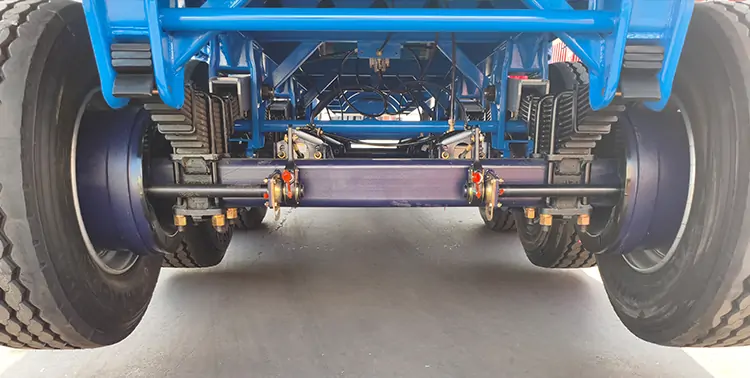
Image: Finite Element Analysis of lowbed trailer main frame under load simulation
🔹 What is Finite Element Analysis?
Finite Element Analysis (FEA) is a computer-based engineering method used to predict how a trailer frame will react to forces such as load, vibration, and torsion. By dividing the chassis into thousands of small “elements”, engineers can visualize stress distribution and identify weak points before manufacturing begins.
⚙ How FEA Improves Trailer Design
- Stress Mapping: Identifies local high-stress areas in main beams and gooseneck sections.
- Weight Optimization: Reduces steel thickness where possible without compromising strength.
- Fatigue Prediction: Simulates millions of load cycles to estimate service life.
- Material Validation: Compares performance of S355, S700, and Domex steels under identical load conditions.
🧱 Load Scenarios & Boundary Conditions
FEA models replicate real-world loading: point loads from axles, distributed loads from cargo, and vertical reactions from kingpin and suspension. Boundary conditions include:
- Fixed kingpin and axle positions
- Gravity + dynamic braking load
- Side tilt for torsional resistance measurement
📊 FEA Output Examples
| Analysis Type | Purpose | Result Interpretation |
|---|---|---|
| Static Stress Analysis | Checks yield and safety factor | Von Mises stress below 70% of yield = safe |
| Modal Analysis | Identifies vibration modes | Resonance frequency must differ from suspension frequency |
| Fatigue Life Simulation | Predicts crack initiation cycles | FAT class ≥ 90 for 10⁶ cycles |
🔩 Design Optimization Techniques
- Add crossmembers or torsion boxes where stress concentrations appear.
- Use gussets near gooseneck joints and suspension hangers.
- Reinforce axle seats with anti-flex profiles.
- Test results under both empty and fully loaded configurations for real correlation.
💡 Integration with Manufacturing
Modern trailer manufacturers integrate FEA into CAD systems, enabling virtual prototypes before cutting steel. Companies like Alura Trailer use FEA-based validation to meet European EN 12642 and EN 1993 design standards, reducing prototype cost and warranty claims.
🧭 Real-World Correlation
FEA results must always be validated through strain gauge testing on actual frames. If stress hotspots match model predictions within ±10%, the design is considered reliable. This feedback loop allows engineers to continuously improve torsional rigidity and fatigue performance.
Conclusion:
Finite Element Analysis transforms trailer design from experience-based to data-driven engineering.
By simulating structural behavior under realistic loads, manufacturers can achieve lighter, stronger, and safer semi trailers — saving material costs while enhancing reliability.