Brake Heat Dissipation & Thermal Fatigue in Heavy Trailers
Engineering overview of heat buildup, thermal stress, and fatigue in heavy trailer braking systems. Covers drum vs disc design, cooling efficiency, material selection, and real-world maintenance practices.
Brake Engineering Thermal Dynamics
📅 Published on 2025-11-10 | ✍️ Semi Trailer News Technical Desk
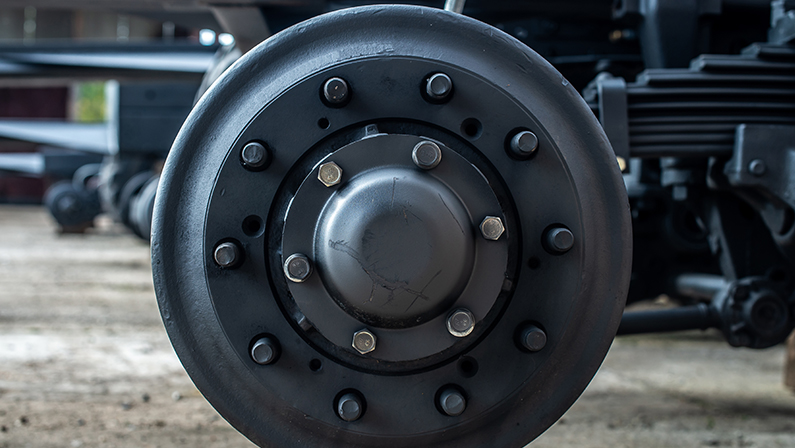
Image: Infrared scan showing temperature rise on disc brakes during mountain descent
🔹 Heat Generation in Heavy Trailer Brakes
When a 40-ton trailer decelerates from 90 km/h, its kinetic energy converts into heat. Over 95% of that energy is absorbed by the braking system — primarily the discs or drums. Repeated braking without sufficient cooling causes temperature rise above 500 °C, leading to material fatigue and reduced braking efficiency.
⚙ Drum vs Disc Brake Heat Behavior
| Parameter | Drum Brake | Disc Brake |
|---|---|---|
| Heat Dissipation | Slower (enclosed design) | Faster (open ventilation) |
| Temperature Range | 150–400 °C | 200–600 °C |
| Cooling Time | Longer | Shorter (better airflow) |
| Thermal Cracking Risk | Low | Moderate–High at 600 °C |
| Maintenance | Cheaper | More frequent inspections |
🧱 Thermal Fatigue Mechanism
Thermal fatigue occurs when brake materials expand and contract during temperature cycling. Each braking event creates microcracks near the surface; over time, these merge into visible radial cracks. This process depends on:
- Material thermal conductivity
- Temperature gradient across disc thickness
- Braking duration and pressure
- Cooling air velocity and ambient temperature
🔩 Material & Design Solutions
- Use high-carbon cast iron or metal matrix composites (MMC) for discs.
- Design with vented rotors for airflow improvement.
- Apply cross-drilled holes or slots for gas evacuation and surface cleaning.
- For drum brakes, ensure adequate fin spacing on outer surface for radiation cooling.
🧭 Testing & Simulation
Thermal behavior is validated using a dynamometer test bench simulating full downhill braking cycles. Infrared thermography and FEA thermal models are used to identify high-temperature regions.
- Peak rotor temperature: 550–600 °C
- Acceptable fade loss: <15 %
- Thermal stress limit: 70 % of yield strength
💡 Maintenance Recommendations
- Inspect disc surface for hairline cracks every 20,000 km.
- Replace pads when friction layer < 5 mm.
- Monitor EBS temperature sensor data if available.
- Allow brakes to cool before washing — sudden temperature drop may cause warping.
🏗 Manufacturer Innovations
Manufacturers such as Alura Trailer apply simulation-based brake design with enhanced airflow ducts around wheel hubs. Some models integrate thermoelectric sensors that log brake temperature, enabling predictive maintenance via telematics.
Conclusion:
Brake heat management directly affects safety and component life in heavy trailers.
Balancing thermal design, material selection, and maintenance ensures reliable performance even in mountain or desert conditions — where failure is not an option.